An
all Maasai Organization
We
measure our success based on the number of children with access
to formal education, clean drinking water, and lives saved through
our village clinic and reproductive health program
Want
to volunteer with us?
Click
for Doctor Volunteer Opportunity
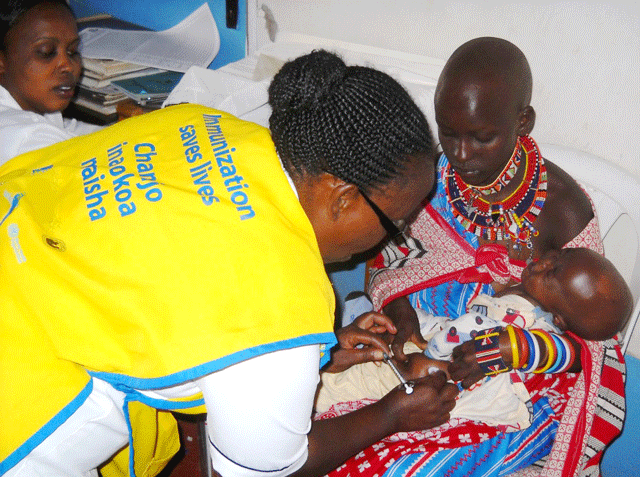
Give the gift of a life-saving vaccine or a mosquito net to a Maasai child today. You can also visit our Gift Catalog for more choices. Thank you.
We
at Maasai Association hold everything we do against the expectations
of our mission statement and wishes of the Maasai people. Every
community development project such as education, health project,
women empowerment project, and water project is driven by our
mission and commitment to the Maasai community that we belong
to. Maasai Association’s projects and programs are within
the framework of the UN Millennium Development Goals (MDG).
Below are some of our accomplishments in the Maasai region of
Kenya .
Merrueshi
Village Clinic
Merrueshi
Village Clinic is providing basic healthcare services to nearly
5000 Maasai residents of Merrueshi and the neighboring communities.
Apart from basic healthcare services, the village clinic has
a strong emphasis on village hygiene, health education, disease
prevention, treatment, vaccination and nutritional education
for mothers and their children. Click
to learn more about our village clinic
Maasai
High School
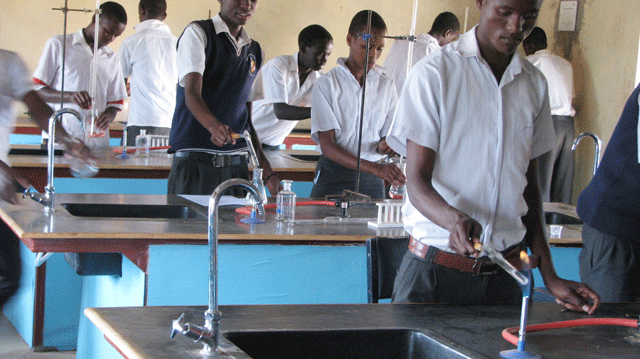
The
aim of Maasai High School is to increase educational opportunities
for hundreds of Maasai children who otherwise do not have the chance
to attend high school. This school has become very popular because
of its unique approach to formal education. The school takes
Maasai cultural heritage into account and is economically affordable
for hundreds of pastoralists in Kajiado Dstrict. Click
to learn more about Maasai High School
Merrueshi
Primary School
Merrueshi
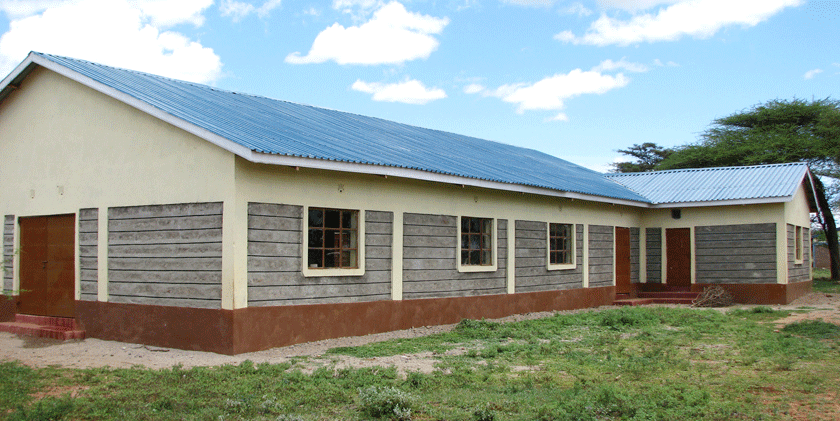
Primary School was our first project. The school went from having
classes under the acacia tree to having a full campus with all
classrooms, teachers’ houses, dormitory facilities for
boys and girls, and running water. Merrueshi Primary School
is one of three best schools in Kajiado District. Fifty five percent (55%) of our
primary school enrollment is girls! This is a tremendous achievement
for a people who once shunned western education for girls. Click
to learn more about our primary school.
Maasai
Computer Learning Center
This
vocational training school is for youth who missed the opportunity
to either become traditional herders or professionals or both.
We are currently looking for more computers needed to reach
more young people yearning for knowledge in IT.
Maasai
Goats and Cows Program
The
aim for Goats and Cows Program is to empower Maasai families
and their children with a gift of a cow or goat. To a Maasai,
having a cow is the same as having money or a bank account for
a Westerner. This program also helps drought victims to rebuild
their lives after prolonged and devastating drought. Most importantly
we have seen more children in schools because of this program.
Click to learn more about
this program
Waterholes
Restoration Project
The
aim of this conservation project is to restore 26 natural waterholes
in Merrueshi Group Ranch. Wildlife and pastoralists of East
Africa have for centuries depended on seasonal waterholes. The
waterholes have silted up as a result of soil erosion and excessive
vegetation growth. Maasai Association has a commitment to bring
these alternative water catchments to use. This project benefit
people and wildlife at the same time. Click
to learn more about this project.
Otherwise
see our program and project page, link on the left column, for
more. Remember our projects are happening because of people
like you. Together we are making a difference. Thank you
Correction: Masai vs. Maasai
Maasai
is the correct spelling not Masai. Masai with
one 'A' is incorrect. In the future please spell Maasai
with double AA. We prefer Maasai, not
Masai. The title Maasai derives from the word
Maa. Maa-sai means my people.